
Most of us want to reduce our environmental impact — but it can feel difficult to know where to begin. The good news is that meaningful climate action starts with everyday decisions.
Small changes, multiplied across thousands of people, create powerful results.
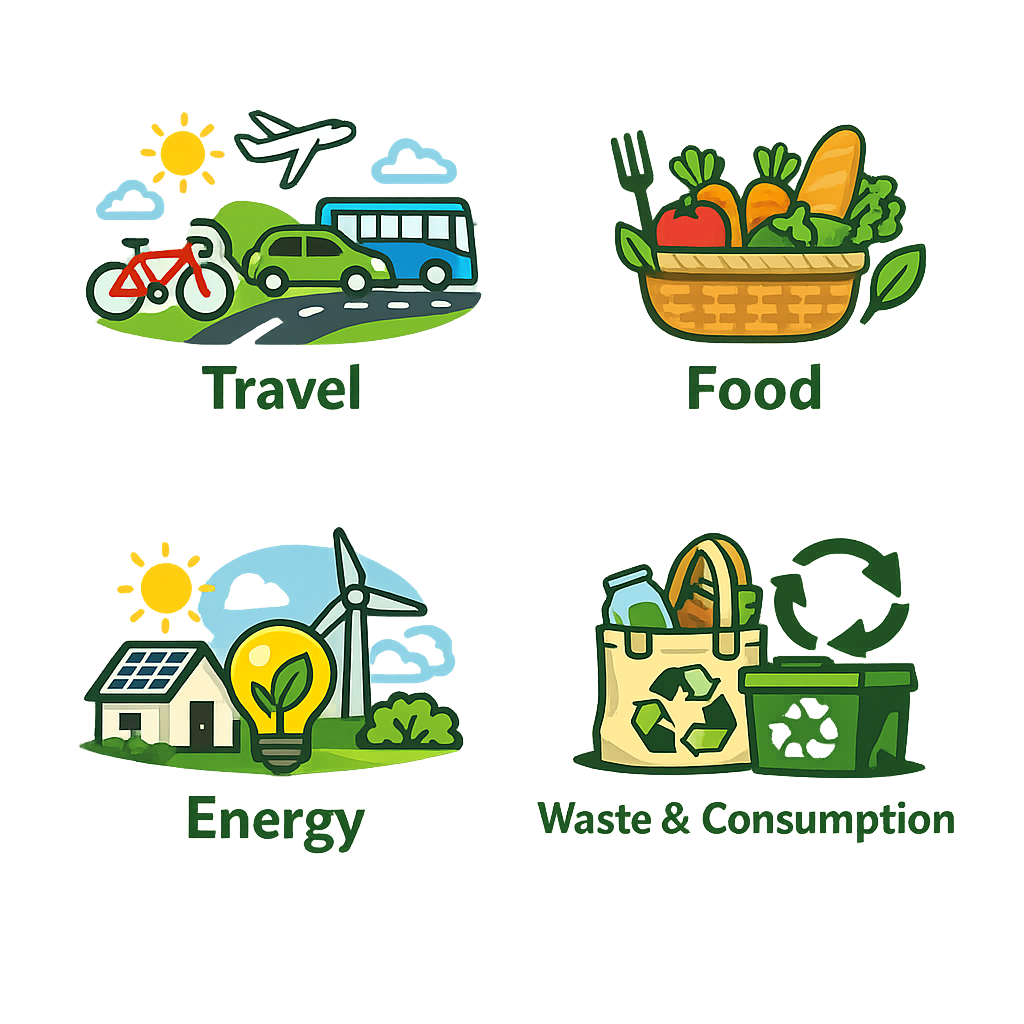
This guide highlights practical actions you can take in four key areas of life:
- Travel
- Food
- Energy
- Waste & Consumption
Travel
Transport is one of the largest sources of carbon emissions for many households.
Walking or cycling short journeys, using public transport and reducing unnecessary trips can significantly lower your carbon footprint. Going car-free can save around 2 tonnes of CO₂e per year. If you do need a car, switching to electric reduces emissions and air pollution.
Flying has a particularly high carbon impact. Even a short European flight can produce 0.5–1 tonne of CO₂ per person, and a long-haul flight can exceed an individual’s annual housing and transport emissions combined.
Choosing lower-carbon travel options makes a real difference — and often improves health and local air quality too.
👉 Visit our Travel page for more ideas.
Food
What we eat matters.
Reducing meat consumption — especially beef and lamb — and eating less dairy can significantly lower your carbon footprint. Moving toward a more plant-based diet can save around 1 tonne of CO₂ per year.
Choosing seasonal, locally sourced food and reducing food waste also helps cut emissions. Planning meals carefully and using leftovers creatively saves both money and resources.
Lower-carbon diets are often healthier and more affordable.
👉 Visit our Food page to explore practical changes.
Energy
Energy use in our homes is another major contributor to emissions.
Improving insulation, turning heating down slightly, washing clothes at lower temperatures and switching to LED bulbs can all reduce energy demand. Turning appliances off instead of leaving them on standby and choosing energy-efficient products also makes a difference.
Switching to a green energy tariff supports renewable energy development in the UK — although it doesn’t change the physical electricity coming into your home.
Many small actions, when adopted widely, add up to significant impact.
Also, see our post: How to save £££ on your heating bills AND get warm and cosy
👉 Visit our Energy page for more tips.
Waste & Consumption
Everything we buy carries a carbon footprint — from manufacturing to transport to disposal.
Reducing unnecessary purchases, repairing rather than replacing, buying second-hand and avoiding single-use items can greatly reduce emissions.
The carbon impact of “stuff” is often overlooked, but for many people it represents one of the largest parts of their footprint.
👉 Visit our Waste & Consumption page to learn more.
Spread the Word
Individual action is powerful — collective action is transformational.
Talk to friends and colleagues. Share ideas. Support local initiatives. Encourage workplaces and community groups to take action. Use your vote to support policies that address climate change effectively.
When more people shrink their footprints, the benefits multiply.
Every Action Counts
You don’t need to be perfect. Progress matters more than perfection.
Some advice from Sustainable Wells on how to reduce your carbon footprint
Together, we can build a healthier, more resilient and lower-carbon Somerset.